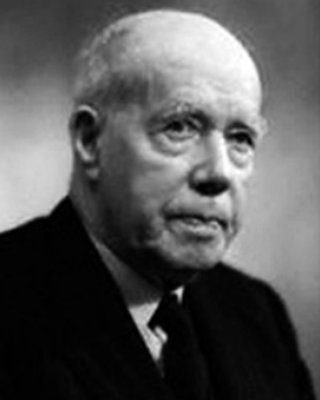
W. D. Ross
1877–1971 · Scottish-born British philosopher
“We have many duties; the situation decides which wins”
Life and education
- Born
- 15 April 1877, Thurso, Scotland
- Died
- 5 May 1971, Oxford, England
- Education
- University of Edinburgh; Balliol College, Oxford
- Positions
- Provost of Oriel College, Oxford (1929–1947); Vice-Chancellor of Oxford (1941–1944)
Scottish-born British philosopher and a leading voice of early 20th-century ethical intuitionism. He was also a top Aristotle scholar who led the editing of the Oxford translation of Aristotle's works.
In The Right and the Good (1930) he criticized both utilitarianism and Kantianism and proposed a pluralist deontology: we have several irreducible "prima facie duties." He was knighted in 1938.
Timeline
- 1900sFellow of Oriel College, Oxford
- 1923Aristotle
- 1929Becomes Provost of Oriel
- 1930The Right and the Good
- 1938Knighted
- 1939Foundations of Ethics
Big ideas
If you think like them…
If you're like Ross, you feel no single principle can explain all of morality. Promises matter, outcomes matter, and you know how to weigh them differently case by case. You also believe right and wrong are something we recognize, not something people agree to make up.
Rough positions on the five questions the quiz uses. These simplify each philosopher's actual views and are open to interpretation.
Thought experiments featuring them
Key works
- The Right and the Good (1930)
- Foundations of Ethics (1939)
- Aristotle (1923)