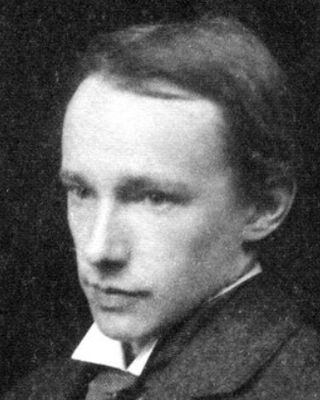
G. E. Moore
1873–1958 · English philosopher
“"Good" can't be defined — you just know it”
Life and education
- Born
- 4 November 1873, London, England
- Died
- 24 October 1958, Cambridge
- Education
- Trinity College, Cambridge
- Positions
- Professor of Philosophy, Cambridge (1925–1939); editor of Mind (1921–1947)
English philosopher who, with Bertrand Russell, rebelled against British idealism and kicked off analytic philosophy. He made clear analysis of common sense and ordinary language the method of philosophy.
In Principia Ethica (1903) he argued that "good" can't be defined as a natural property like pleasure, calling that mistake the "naturalistic fallacy." The book became the starting point of 20th-century metaethics and influenced the Bloomsbury Group of Cambridge-connected intellectuals.
Timeline
- 1903"The Refutation of Idealism"; Principia Ethica
- 1921Editor of Mind
- 1925Professor at Cambridge; "A Defence of Common Sense"
- 1939"Proof of an External World" — "Here is one hand"
Big ideas
If you think like them…
If you're like Moore, you feel "good" is real but a different kind of thing from what science measures. You resist reducing moral judgments to feelings or taste, and you tend to pick the option with the better outcome. You also trust plain common sense over complicated theories.
Rough positions on the five questions the quiz uses. These simplify each philosopher's actual views and are open to interpretation.
Thought experiments featuring them
Key works
- Principia Ethica (1903)
- "The Refutation of Idealism" (1903)
- "A Defence of Common Sense" (1925)
- "Proof of an External World" (1939)