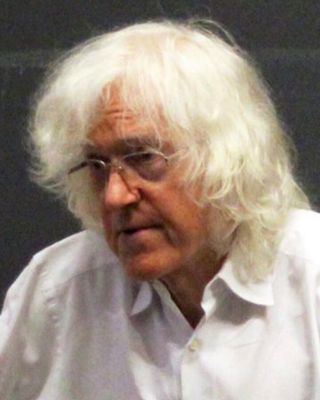
Derek Parfit
1942–2017 · British philosopher
“Identity matters less than you think”
Life and education
- Born
- 11 December 1942, Chengdu, China
- Died
- 1 January 2017, London, England
- Education
- Eton College; Balliol College, Oxford (BA in Modern History, 1964)
- Positions
- Fellow of All Souls College, Oxford (1967–2010); visiting professor at NYU, Harvard and Rutgers
British philosopher widely considered one of the most influential thinkers of the late 20th century on personal identity and ethics. Born in China to missionary-doctor parents, he studied history and switched to philosophy while studying in the US. He spent his whole career at All Souls College, Oxford, absorbed in research.
In Reasons and Persons (1984), he used thought experiments like teleportation and fission to conclude that personal identity matters less than we think, and he raised the "Repugnant Conclusion" in the ethics of future generations. His late magnum opus On What Matters defended strong moral realism and a "Triple Theory" on which Kantianism, consequentialism and contractualism are "climbing the same mountain on different sides." He received the Rolf Schock Prize in 2014.
Timeline
- 1967Fellow of All Souls
- 1971"Personal Identity"
- 1984Reasons and Persons
- 2011On What Matters, vols. 1–2
- 2014Rolf Schock Prize
- 2017Dies 1 January; On What Matters vol. 3 published
Big ideas
If you think like them…
If you're like Parfit, you think teleportation counts as survival as long as memory and personality carry on. You ask what really matters rather than "is it really me?", and you believe moral truths exist objectively. You care about outcomes but try to reconcile them with principles.
Rough positions on the five questions the quiz uses. These simplify each philosopher's actual views and are open to interpretation.
Thought experiments featuring them
Key works
- "Personal Identity" (1971)
- Reasons and Persons (1984)
- On What Matters, vols. 1–3 (2011, 2017)