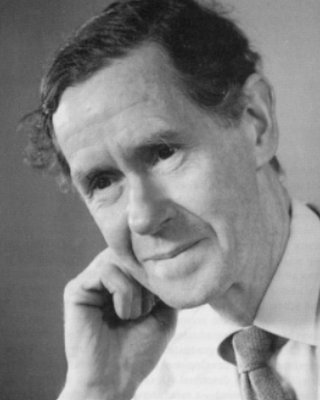
J. L. Mackie
1917–1981 · Australian philosopher
“Morality isn't discovered, it's invented”
Life and education
- Born
- 25 August 1917, Sydney, Australia
- Died
- 12 December 1981, Oxford, England
- Education
- University of Sydney (under John Anderson); Oriel College, Oxford
- Positions
- Otago, Sydney and York, then Fellow of University College, Oxford (from 1967)
Australian philosopher known for sharp arguments in metaphysics, philosophy of religion and ethics. He served in the army during World War II and taught in Australia, New Zealand and Britain before settling at Oxford.
His 1977 book Ethics: Inventing Right and Wrong is famous for its first line: "There are no objective values." He proposed an "error theory": our moral judgments presuppose objective values, but none exist, so they're all false. In philosophy of religion he's also known for a paper attacking theism with the problem of evil and for The Miracle of Theism.
Timeline
- 1955"Evil and Omnipotence" — the problem of evil
- 1967Fellow of University College, Oxford
- 1974The Cement of the Universe — on causation
- 1977Ethics: Inventing Right and Wrong
- 1982The Miracle of Theism (posthumous)
Big ideas
If you think like them…
If you're like Mackie, you see morality as something humans made, not facts carved into the universe. That doesn't mean ditching morality — it means we have to decide for ourselves what to build and keep. You also have a strong naturalist streak about the mind.
Rough positions on the five questions the quiz uses. These simplify each philosopher's actual views and are open to interpretation.
Thought experiments featuring them
Key works
- Ethics: Inventing Right and Wrong (1977)
- The Cement of the Universe (1974)
- Problems from Locke (1976)
- The Miracle of Theism (1982)