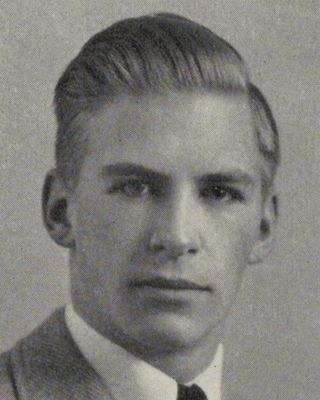
John Rawls
1921–2002 · American philosopher
“Fair rules are the ones you'd pick behind a veil of ignorance”
Life and education
- Born
- 21 February 1921, Baltimore, Maryland, USA
- Died
- 24 November 2002, Lexington, Massachusetts
- Education
- Princeton (BA 1943, PhD 1950)
- Positions
- Cornell, MIT, then Harvard (from 1962); University Professor
The American philosopher who defined 20th-century political philosophy. He served in the Pacific during World War II, an experience that left deep marks on his views of religion and justice. He taught at Harvard for decades and trained a whole generation of students.
In A Theory of Justice (1971) he proposed "justice as fairness": just principles are the ones rational people would choose behind a "veil of ignorance," not knowing their own position — and it reshaped an Anglo-American ethics then dominated by utilitarianism. He received the National Humanities Medal in 1999.
Timeline
- 1950PhD, Princeton
- 1962Joins Harvard
- 1971A Theory of Justice
- 1993Political Liberalism
- 1999The Law of Peoples; National Humanities Medal
- 2001Justice as Fairness: A Restatement
Big ideas
If you think like them…
If you're like Rawls, you think about fairness by asking "what rules would I want if I didn't know where I'd be born?" You oppose sacrificing one person for the total good, and you see morality as principles reasonable people could all accept.
Rough positions on the five questions the quiz uses. These simplify each philosopher's actual views and are open to interpretation.
Thought experiments featuring them
Key works
- A Theory of Justice (1971)
- Political Liberalism (1993)
- The Law of Peoples (1999)
- Justice as Fairness: A Restatement (2001)