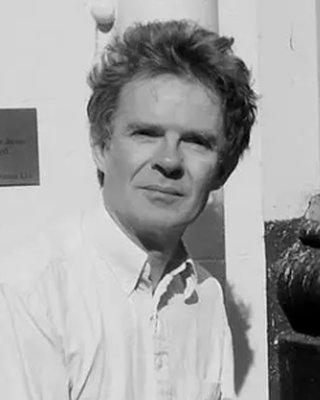
Galen Strawson
b. 1952 · British philosopher
“Nobody can be the ultimate cause of what they do”
Life and education
- Born
- 1952, England
- Education
- Cambridge; Oxford BPhil (1977) and DPhil (1983)
- Position
- Chair in Philosophy, University of Texas at Austin (since 2012)
- Fields
- Free will, consciousness, the self, Hume
British analytic philosopher and son of the famous Oxford philosopher P. F. Strawson. After posts at Oxford and Reading, among others, he has taught at the University of Texas at Austin since 2012.
In the free will debate he's known for the "Basic Argument," which says nobody can be ultimately responsible for their actions. On consciousness, he made the provocative case that taking physicalism seriously actually leads to panpsychism (some element of experience in all matter). His essay "Against Narrativity," which criticizes the idea that we must understand our lives as stories, is also widely read.
Timeline
- 1986Freedom and Belief
- 1989The Secret Connexion: Causation, Realism, and David Hume
- 1994"The Impossibility of Moral Responsibility" — the Basic Argument
- 2004"Against Narrativity"
- 2006Consciousness and Its Place in Nature — the panpsychism debate
- 2012Joins UT Austin
Big ideas
If you think like them…
If you're like Galen Strawson, you ask hard questions about responsibility and blame. You can't quite shake the thought that "they were born and raised that way too," so you lean toward understanding over payback. You also refuse to brush the mystery of consciousness aside.
Rough positions on the five questions the quiz uses. These simplify each philosopher's actual views and are open to interpretation.
Thought experiments featuring them
Key works
- Freedom and Belief (1986)
- "The Impossibility of Moral Responsibility" (1994)
- Selves (2009)
- Things That Bother Me (2018)