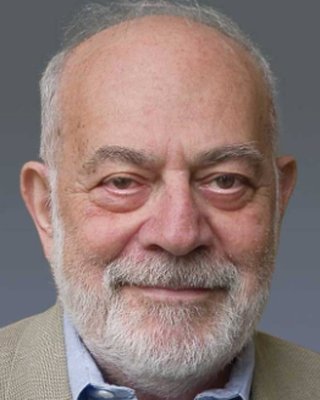
Harry Frankfurt
1929–2023 · American philosopher
“Responsibility is about whose will an act came from”
Life and education
- Born
- 29 May 1929, Langhorne, Pennsylvania, USA
- Died
- 16 July 2023, Santa Monica, California
- Education
- Johns Hopkins University, BA (1949) and PhD (1954)
- Positions
- Ohio State, Rockefeller, Yale; Princeton (1990–2002), later emeritus
American philosopher who left a big mark on free will, moral responsibility, personhood and love. His 1969 "Frankfurt cases" — you can be responsible even if you couldn't have done otherwise — changed the direction of the free will debate.
In 1971 he explained personhood and freedom of the will with "second-order desires" — desires about your desires. His essay "On Bullshit," first published in 1986, came out as a small book in 2005 and became a New York Times bestseller, making him famous far beyond philosophy.
Timeline
- 1954PhD, Johns Hopkins
- 1969"Alternate Possibilities and Moral Responsibility" — Frankfurt cases
- 1971"Freedom of the Will and the Concept of a Person" — second-order desires
- 1988The Importance of What We Care About
- 2004The Reasons of Love
- 2005On Bullshit published as a book
- 2023Dies 16 July
Big ideas
If you think like them…
If you're like Frankfurt, you separate "what I really want" from "what I just happen to crave." You care less about how many options you had and more about whether a choice came from the real you. Even if determinism is true, you feel responsibility still means something.
Rough positions on the five questions the quiz uses. These simplify each philosopher's actual views and are open to interpretation.
Thought experiments featuring them
Key works
- "Alternate Possibilities and Moral Responsibility" (1969)
- "Freedom of the Will and the Concept of a Person" (1971)
- The Reasons of Love (2004)
- On Bullshit (2005)