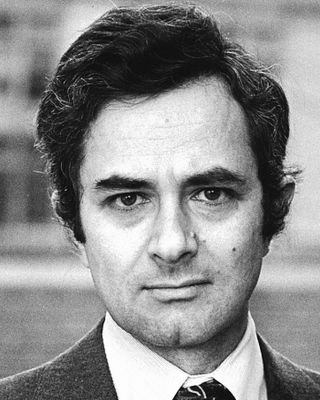
Thomas Nagel
b. 1937 · American philosopher
“What is it like to be a bat?”
Life and education
- Born
- 4 July 1937, Belgrade, Yugoslavia
- Education
- Cornell (BA 1958); Oxford BPhil (1960); Harvard PhD (1963, under John Rawls)
- Positions
- UC Berkeley (1963–1966), Princeton (1966–1980), NYU (from 1980); now NYU professor emeritus
- Fields
- Philosophy of mind, ethics, political philosophy
American philosopher who stands out in both philosophy of mind and ethics in the late 20th century. He did his PhD under John Rawls at Harvard and taught philosophy and law at NYU.
His 1974 paper "What Is It Like to Be a Bat?" argued that consciousness has a character accessible only from a subjective point of view, which objective physical science can't capture. In Mind and Cosmos (2012) he argued that neo-Darwinian materialism can't account for consciousness and reason, stirring up major controversy. He received the Balzan Prize and the Rolf Schock Prize in 2008.
Timeline
- 1963PhD, Harvard
- 1970The Possibility of Altruism
- 1974"What Is It Like to Be a Bat?"
- 1979Mortal Questions — moral luck
- 1986The View from Nowhere
- 2012Mind and Cosmos
Big ideas
If you think like them…
If you're like Nagel, you're sensitive to the gap between "what it feels like from inside" and "what explains it from outside." You respect science but don't think it's everything, and you tend to believe moral truths are discovered.
Rough positions on the five questions the quiz uses. These simplify each philosopher's actual views and are open to interpretation.
Thought experiments featuring them
Key works
- "What Is It Like to Be a Bat?" (1974)
- Mortal Questions (1979)
- The View from Nowhere (1986)
- What Does It All Mean? (1987)
- Mind and Cosmos (2012)