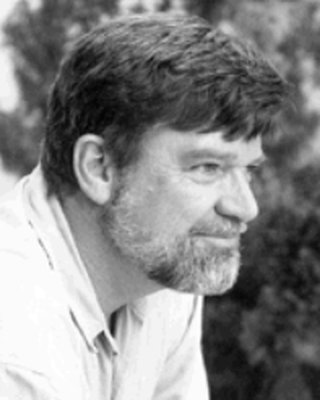
Paul Churchland
b. 1942 · Canadian philosopher
“Neuroscience will replace our everyday talk about the mind”
Life and education
- Born
- 21 October 1942, Vancouver, Canada
- Education
- University of British Columbia (BA 1964); University of Pittsburgh (PhD 1969, under Wilfrid Sellars)
- Positions
- University of Manitoba (1969–1984), UC San Diego (from 1984); now professor emeritus
- Fields
- Philosophy of mind, neurophilosophy, philosophy of science
Canadian philosopher and a leading figure of "neurophilosophy," which put neuroscience at the center of philosophy. He works at UC San Diego with his wife Patricia Churchland — together they're known as "the Churchlands."
In a 1981 paper he proposed "eliminative materialism": everyday psychological concepts like belief and desire belong to a false theory that mature neuroscience will replace. Just as "phlogiston" disappeared from science, one day "belief" might too.
Timeline
- 1969PhD, Pittsburgh
- 1979Scientific Realism and the Plasticity of Mind
- 1981"Eliminative Materialism and the Propositional Attitudes"
- 1984Matter and Consciousness; joins UC San Diego
- 1995The Engine of Reason, the Seat of the Soul
- 2012Plato's Camera
Big ideas
If you think like them…
If you're like Churchland, you're a science optimist who believes everything about the mind will eventually be explained by the brain. You're ready to drop even familiar everyday concepts if science says they're wrong. You also tend to see morality as a social skill the brain learns rather than a transcendent fact.
Rough positions on the five questions the quiz uses. These simplify each philosopher's actual views and are open to interpretation.
Thought experiments featuring them
Key works
- Scientific Realism and the Plasticity of Mind (1979)
- "Eliminative Materialism and the Propositional Attitudes" (1981)
- Matter and Consciousness (1984)
- The Engine of Reason, the Seat of the Soul (1995)